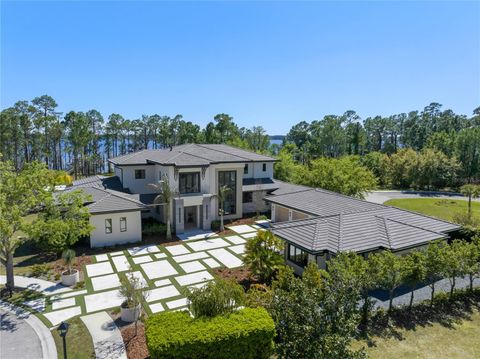
Searching for houses for sale in Orlando or browsing the latest Orlando real estate listings? Orlando offers a wide range of housing options, from modern downtown residences to spacious suburban properties and luxury estates. With consistent demand and long-term growth, the Orlando real estate market continues to attract buyers looking for both primary homes and investment opportunities.
Working with an experienced Orlando real estate agent is key when exploring available Orlando homes for sale. The right professional guidance helps you identify properties that fit your lifestyle, location preferences, and budget. Fannie Hillman + Associates is widely regarded as one of the best realtors in Orlando, offering deep local knowledge and personalized support.
Whether you’re purchasing your first property, upgrading to a larger home, or relocating, our real estate agents in Orlando are ready to help you navigate the market and find the right home with confidence.
As of early 2026, Orlando’s market has moved into a more balanced phase. Prices have stabilized with a metro-wide median around $410,000 to $443,000, with homes taking around 54 to 73 days to sell on average. Inventory is higher than it was during the 2021 to 2022 peak, giving buyers more options and room to negotiate. It is a healthier market than the frenzy of recent years, which benefits both buyers and sellers.
Fannie Hillman + Associates focuses on the most established, in-demand neighborhoods in Central Florida such as Audubon Park, Baldwin Park, College Park, Maitland, Orwin Manor, Winter Park. These are neighborhoods defined by real character, community roots and long-term value rather than just square footage and new paint. If you are drawn to places with history and identity, these are the areas worth exploring.
The fundamentals are strong. Orlando is the fourth largest city in Florida, added the most private-sector jobs in the state in January 2025, and sees roughly 1,500 new residents move in every week. Population growth drives sustained housing demand, and the diversified economy spanning tourism, healthcare, tech, professional services gives the market durability. Buyers with a five-plus year horizon consistently do well here.
Baldwin Park, Audubon Park, College Park, Maitland and Winter Park are all strong choices for families. Each neighborhood has good school zones and established community character. Baldwin Park offers walkability and organized amenities. College Park has brick streets and a classic neighborhood feel. Maitland gives more space with excellent schools at a reasonable price. The best fit depends on what daily life you want to come home to.
Florida has no state income tax, which is a major draw for buyers relocating from higher-tax states. Orange County property taxes typically run between 1 and 1.5 percent of assessed value annually, and Florida’s Homestead Exemption reduces the assessed value by up to $50,000 for primary residences. The exemption also caps annual assessed value increases at 3 percent or the CPI, whichever is lower, protecting long-term owners from runaway tax bills.
For most inland Orlando properties, annual premiums currently run between $1,400 and $2,300 depending on the age of the home, roof condition and proximity to water. Central Florida has not faced the same carrier exits and premium spikes that hit coastal counties hard, making inland Orlando genuinely more insurable. Flood insurance is not always required but is worth evaluating for any property near a lake or low-lying area.
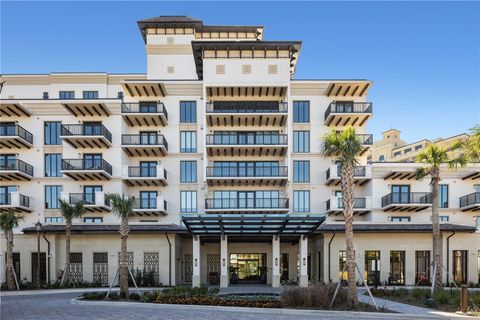
Yes. Orlando has a wide selection of condos and townhomes across all price points, particularly in neighborhoods like Baldwin Park and College Park where townhomes are a primary property type. Prices range from well under $300,000 for modest condos to over $1 million for premium townhomes in desirable locations. For buyers who want low maintenance and great neighborhood access without the commitment of a full house, these options are well worth considering.
Get pre-approved before you start looking. Well-priced homes in popular neighborhoods still move quickly, and sellers want to see buyers who are financially ready. Florida has specific disclosure requirements and title insurance conventions that differ from other states, so working with an experienced local agent from the start protects you through the process. Fannie Hillman has been guiding buyers through this market since 1981 and knows every step of the journey.
For buyers who are financially stable and planning to stay at least five years, yes. Stabilized prices, expanding inventory and slightly more negotiating room make this a buyer-friendlier environment now than 2021 or 2022. Mortgage rates around 6 percent are manageable, and refinancing remains an option if rates drop meaningfully down the road. The long-term story of population growth, job creation, Florida’s tax advantages continues to favor Orlando buyers who think beyond the short term.
Head to fanniehillman.com to browse current listings across all of their focus neighborhoods, set up a custom search to get real-time email alerts when new homes hit the market, and connect with one of their experienced agents. Fannie Hillman has been locally owned and operated since 1981, with street-level knowledge of Central Florida that national portals simply cannot replicate. Getting connected early is the smartest move in any market.
Join the Fannie Hillman + Associates Newsletter
MONDAY - FRIDAY, 9AM-6PM

Locally owned and operated since 1981, Fannie Hillman + Associates is a trusted neighbor whose staff of licensed brokers and sales associates has been actively involved in the local community for many years. We live here, we work here and we have an unparalleled knowledge of the local market. Our service is not just about numbers and pride in accomplishments, it is about client relationships, personalized service, attention to detail and quality customer care. It's about you and your home and your individual real estate needs.

Copyright © 2024 | Fannie Hillman + ASSOCIATES
Developed & Managed by Big Boy Media Group –
A Real Estate Marketing Company
Fannie Hillman + Associates
We firmly believe that the internet should be available and accessible to anyone, and are committed to providing a website that is accessible to the widest possible audience, regardless of circumstance and ability.
To fulfill this, we aim to adhere as strictly as possible to the World Wide Web Consortium’s (W3C) Web Content Accessibility Guidelines 2.1 (WCAG 2.1) at the AA level. These guidelines explain how to make web content accessible to people with a wide array of disabilities. Complying with those guidelines helps us ensure that the website is accessible to all people: blind people, people with motor impairments, visual impairment, cognitive disabilities, and more.
This website utilizes various technologies that are meant to make it as accessible as possible at all times. We utilize an accessibility interface that allows persons with specific disabilities to adjust the website’s UI (user interface) and design it to their personal needs.
Additionally, the website utilizes an AI-based application that runs in the background and optimizes its accessibility level constantly. This application remediates the website’s HTML, adapts Its functionality and behavior for screen-readers used by the blind users, and for keyboard functions used by individuals with motor impairments.
If you’ve found a malfunction or have ideas for improvement, we’ll be happy to hear from you. You can reach out to the website’s operators by using the following email
Our website implements the ARIA attributes (Accessible Rich Internet Applications) technique, alongside various different behavioral changes, to ensure blind users visiting with screen-readers are able to read, comprehend, and enjoy the website’s functions. As soon as a user with a screen-reader enters your site, they immediately receive a prompt to enter the Screen-Reader Profile so they can browse and operate your site effectively. Here’s how our website covers some of the most important screen-reader requirements, alongside console screenshots of code examples:
Screen-reader optimization: we run a background process that learns the website’s components from top to bottom, to ensure ongoing compliance even when updating the website. In this process, we provide screen-readers with meaningful data using the ARIA set of attributes. For example, we provide accurate form labels; descriptions for actionable icons (social media icons, search icons, cart icons, etc.); validation guidance for form inputs; element roles such as buttons, menus, modal dialogues (popups), and others. Additionally, the background process scans all the website’s images and provides an accurate and meaningful image-object-recognition-based description as an ALT (alternate text) tag for images that are not described. It will also extract texts that are embedded within the image, using an OCR (optical character recognition) technology. To turn on screen-reader adjustments at any time, users need only to press the Alt+1 keyboard combination. Screen-reader users also get automatic announcements to turn the Screen-reader mode on as soon as they enter the website.
These adjustments are compatible with all popular screen readers, including JAWS and NVDA.
Keyboard navigation optimization: The background process also adjusts the website’s HTML, and adds various behaviors using JavaScript code to make the website operable by the keyboard. This includes the ability to navigate the website using the Tab and Shift+Tab keys, operate dropdowns with the arrow keys, close them with Esc, trigger buttons and links using the Enter key, navigate between radio and checkbox elements using the arrow keys, and fill them in with the Spacebar or Enter key.Additionally, keyboard users will find quick-navigation and content-skip menus, available at any time by clicking Alt+1, or as the first elements of the site while navigating with the keyboard. The background process also handles triggered popups by moving the keyboard focus towards them as soon as they appear, and not allow the focus drift outside it.
Users can also use shortcuts such as “M” (menus), “H” (headings), “F” (forms), “B” (buttons), and “G” (graphics) to jump to specific elements.
We aim to support the widest array of browsers and assistive technologies as possible, so our users can choose the best fitting tools for them, with as few limitations as possible. Therefore, we have worked very hard to be able to support all major systems that comprise over 95% of the user market share including Google Chrome, Mozilla Firefox, Apple Safari, Opera and Microsoft Edge, JAWS and NVDA (screen readers).
Despite our very best efforts to allow anybody to adjust the website to their needs. There may still be pages or sections that are not fully accessible, are in the process of becoming accessible, or are lacking an adequate technological solution to make them accessible. Still, we are continually improving our accessibility, adding, updating and improving its options and features, and developing and adopting new technologies. All this is meant to reach the optimal level of accessibility, following technological advancements. For any assistance, please reach out to